Mom, I published a paper!
Last year, I published the first paper of my PhD! It was accepted in the journal Frontiers in Microbiology, which felt like a big personal achievement. However, I also experienced a bit of loneliness—realizing that many of the people who support me the most often can’t access or fully grasp the core message of the article.
That’s why I wanted to share the main goals of this first paper in a way that’s accessible to the general public—and, of course, to make my mom proud.
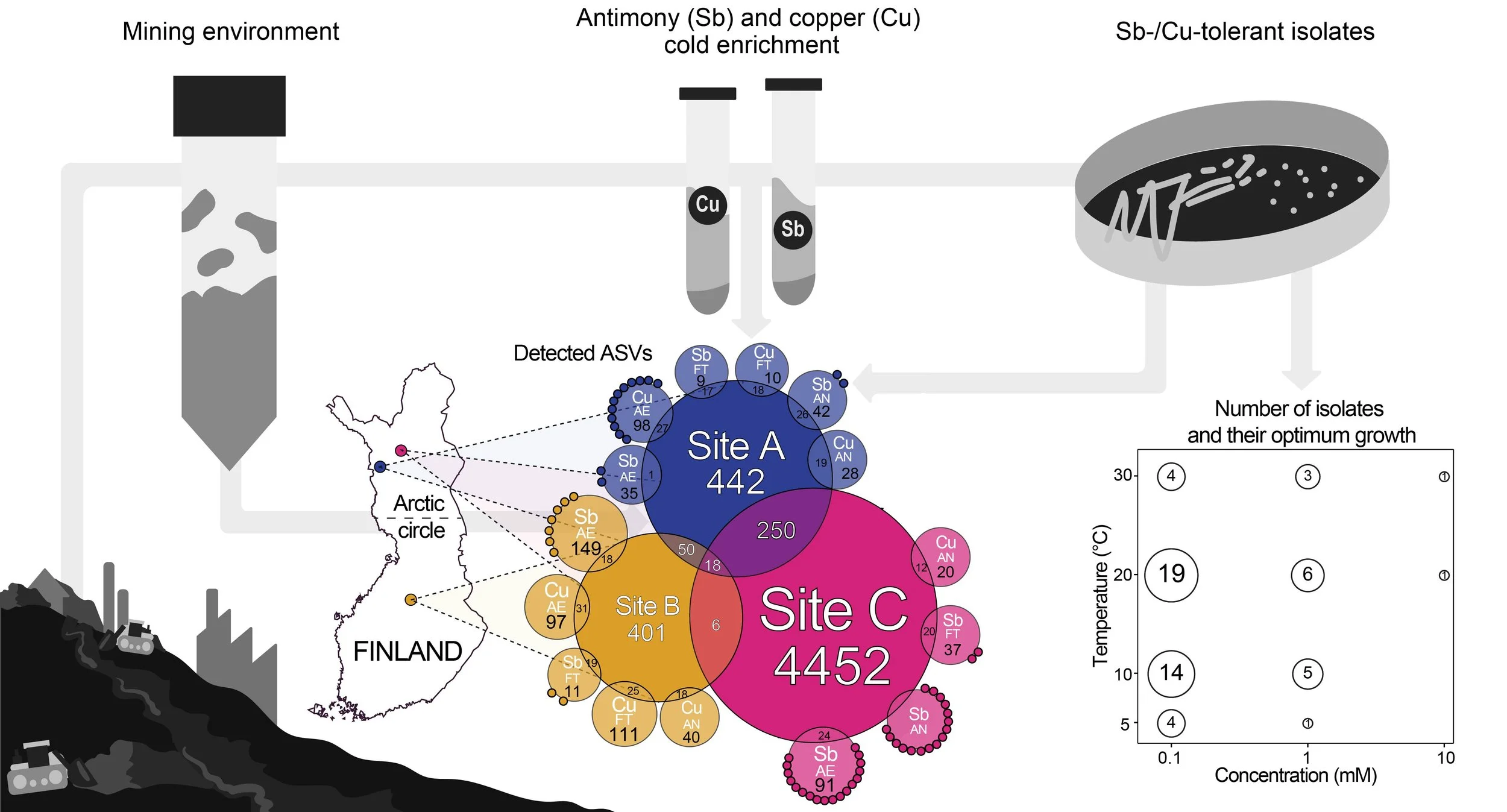
Visual summary of scientific methods and achievements. All rights reserved toPrieto-Fernández, F., Lambert, S., & Kujala, K. (2024). Assessment of microbial communities from cold mine environments and subsequent enrichment, isolation and characterization of putative antimony- or copper-metabolizing microorganisms. Frontiers in Microbiology 15:1386120.https://doi.org/10.3389/fmicb.2024.1386120.
The Problem: Metals, Metalloids, and Pollution
Mines generate pollutants which, if not properly controlled, can affect the surrounding ecosystems. But did you know that some tiny organisms can survive in both extreme cold and contaminated environments?
While many organisms struggle to survive under these conditions, certain microbes have evolved unique ways to handle toxic elements. Thanks to their ability to thrive in such challenging environments, they can actually help clean up pollution from mines.
We found the key to save the Arctic from contamination!
Well, more or less. With the goal of finding pollutant-resistant microbes, we visited Finnish mines to collect soil that might contain these tiny living beings. Although the long-finnish summerdays gave us warm during sampling, during the wintertime it was a challenge. Everything was covered in snow and ice, but we had to go in order to know which microbes survive in the wintertime.
After spending a few months in the lab, we went searching for the toughest microbes — the kind that can tolerate harmful metals, like the metalloid antimony (we’ll talk more about what a metalloid is another time, but for now, just think of it as something similar to metals). And we found plenty! Not only could they tolerate antimony, but we also suspect they interact with it as a way to obtain energy. Even more exciting: in the lab we demonstrated that some of these antimony-resistant microbes could also survive freezing temperatures. In other words, these tiny organisms don’t just endure extreme conditions — they can actually thrive in them.
How Did We Do It? - The Science Behind It
We studied the DNA of the bacteria present in the soil. To select for the microbes capable of surviving in contaminated environments, we fed them with a metalloid—antimony. This allowed us to isolate those that could "breathe" antimony instead of oxygen, a unique survival strategy! While the DNA technique we used, known as the 16S rRNA gene sequencing, is widely applied, we were able to identify several bacteria, including Pseudomonas veronii, which had not been previously studied for its resistance to antimony—bringing a fresh perspective to our research.
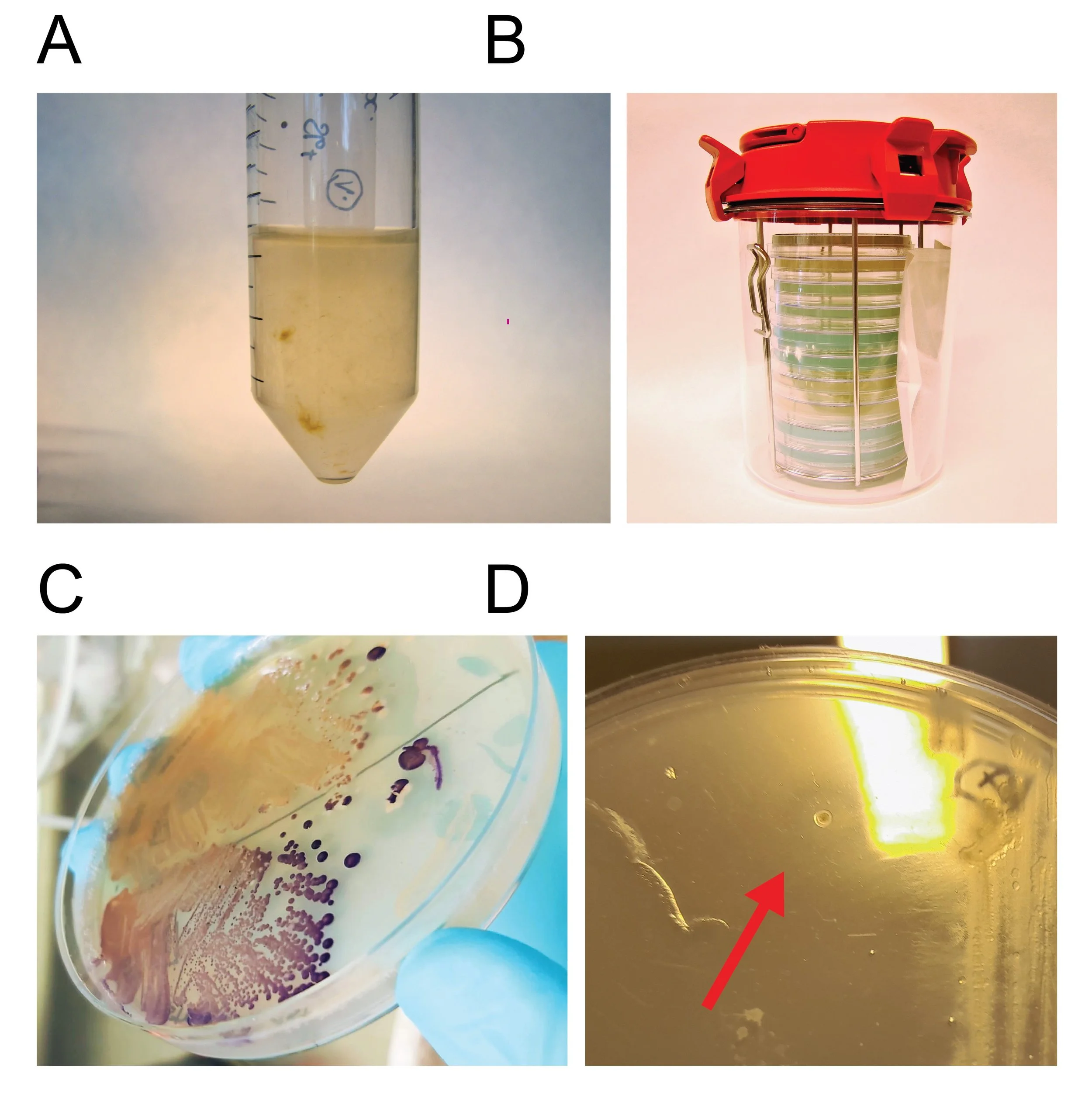
Pictures of enrichments and isolate cultures. All rights reserved to Prieto-Fernández, F., Lambert, S., & Kujala, K. (2024). Assessment of microbial communities from cold mine environments and subsequent enrichment, isolation and characterization of putative antimony- or copper-metabolizing microorganisms. Frontiers in Microbiology 15:1386120.https://doi.org/10.3389/fmicb.2024.1386120.
Why You Should Feel Proud of Your Daughter
These findings could lead to solutions for mining contamination, using tiny helpers to naturally clean contaminated sites. So, the next time you think of cold, lifeless Arctic landscapes, remember: beneath the surface, there’s a hidden world of tiny microbes working hard to make a difference!