From the time of my BSc until I graduated with my PhD, plus all the lab work in between, I had to design, contribute to and present quite a few scientific posters.
One of the posters I made received a prize from FEMS, the Federation of European Microbiological Societies. I have already explained how I designed this one. So, this time I want to show the story behind another one and give a bit of credit to something that we usually do not talk about: the conversations related to the posters.
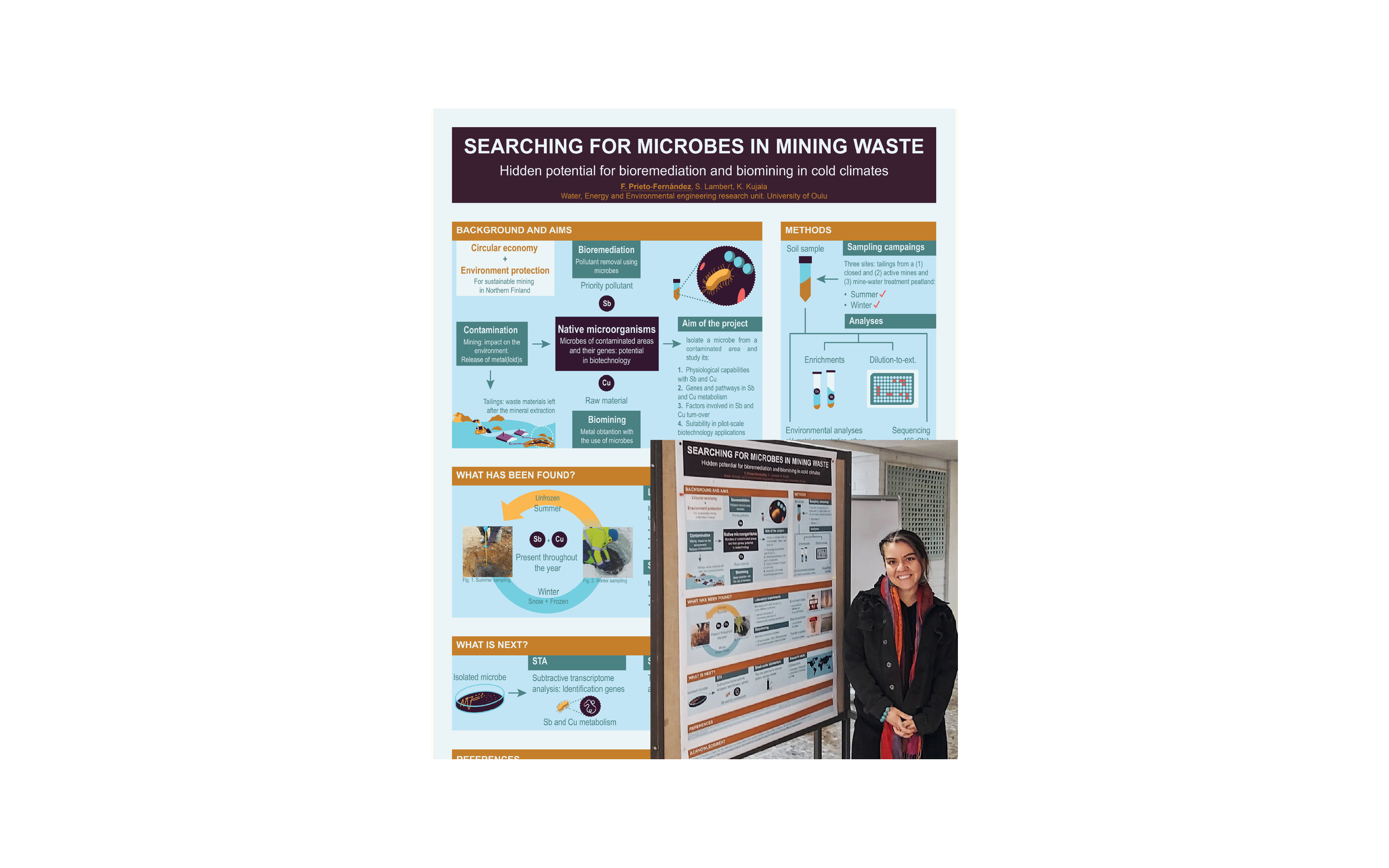
This is the poster that did not win a prize, but opened a door that honestly felt like one.
During the poster session, it caught the attention of a senior researcher who happened to be working in a related field. We started talking and, a few months later, that conversation somehow led me all the way to the Arctic.
So, how did that happen?
And more importantly, how can you design and present a poster that actually helps you reach the goal you have in mind?
Start with the goal, not the design
Before thinking about colours, figures or where your title should go, ask yourself two things:
Who is going to see this poster? And what would be the best possible outcome from those interactions?
That answer can change depending on where you are in your career.
At the midpoint of my PhD, for example, meeting researchers working on similar topics and finding potential collaborations was very valuable to me. However, by the end of the PhD, when the project was already finishing, my priorities were different.
Your poster does not exist in isolation. It is there because you want somebody to stop, understand what you have done and, hopefully, start a conversation.
Read, decide and simplify
Prepare the material you want to build the poster from. Read it. Listen to your collaborators. Create the actual story.
Then highlight what needs to be there, what would be nice to include and what is simply a maybe.
That last category can wait (maybe once everything is there and there is reasonable space ;)).
Fun fact: I originally wanted to add the famous line “write drunk, edit sober” in this part. I always thought Hemingway said it. Apparently, he didn't.
But I still like the idea behind it: do not put too many limits on yourself while you are brainstorming. Get the ideas out first. Edit afterwards.
Scientific posters need exactly that process.
Sketch before making it pretty
This is usually where my actual design process starts.
I sketch.
Nothing fancy. I think about the structure, the hierarchy and how somebody is going to move through the information I have selected.
What should they see first? What comes next? Can part of the explanation become a diagram instead of another paragraph?
Only after that do I start making the actual drawings, adding the text and building the visual system.
And then: review it.
Ask colleagues, collaborators or supervisors to have a look. When you have been staring at the same research for months or years, it is incredibly easy to assume that something is obvious when it isn't.
A second pair of eyes helps.
And then... present it
This is actually the part I wanted to get to.
Rehearse your poster. Present it to yourself. Ask a colleague to listen. Explain it once, then again, then shorten it, and then try explaining it to somebody who does not work directly on your topic.
I think we sometimes overlook this part because the poster is standing behind us, full of information, as if it should be able to do all the work.
It can't.
How you communicate the research can be as important as what is written on the poster. Repeat your presentation until you feel comfortable explaining it to a professor, a PhD student or an intern without simply reading what is behind you.
Because a poster session is not only about showcasing results. It might lead to somebody saying, “I really like your poster.” It might lead to feedback: “Have you tried the method from this paper?” It might lead to somebody questioning your interpretation.
Or, in my case, it might lead to a completely unexpected collaboration.
The poster that took me to Svalbard
That is how I met Prof. David Pearce. We started talking about bacteria and their potential use for bioremediation in Arctic environments. Maybe he noticed how excited I was about the research. Maybe it was because I could not stop talking about expeditions. Probably a bit of both.
A few months later, I found myself travelling to the Arctic archipelago of Svalbard as part of a research trip.
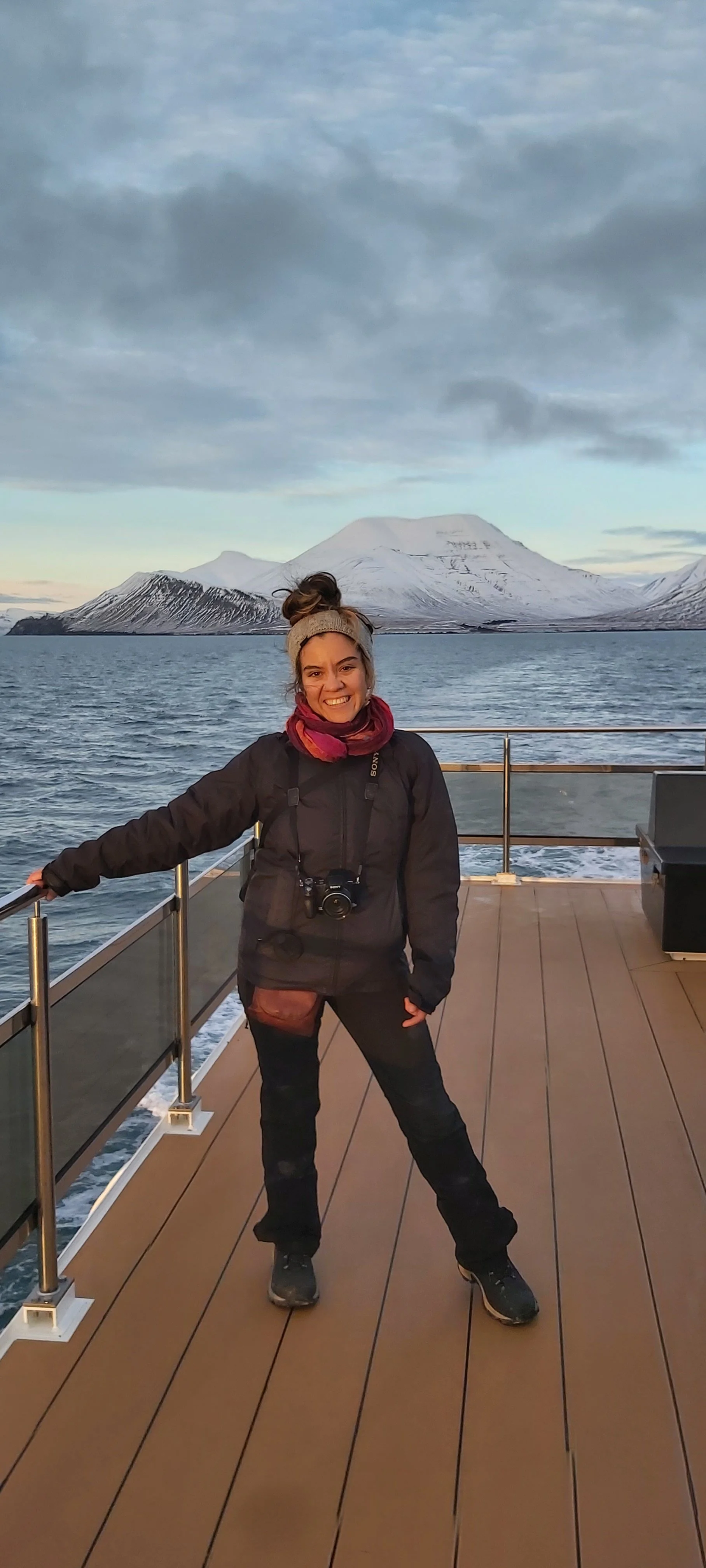
Material from that expedition later became part of my science communication book and also contributed to a research paper, although that one is still not published (sorry!).
And it all started with a conversation in front of a poster.
It is a useful reminder that scientific posters can be much more than a requirement for a conference.
They can be an open door.
To feedback. To new ideas. To collaborations. Sometimes even to places you really did not expect to end up.
I still wonder how much the design of that poster helped somebody stop, look at my research and become interested enough to start that first conversation.
Are you stuck with your scientific poster? Or do you feel like the poster does not really reflect everything you have achieved with your research?